
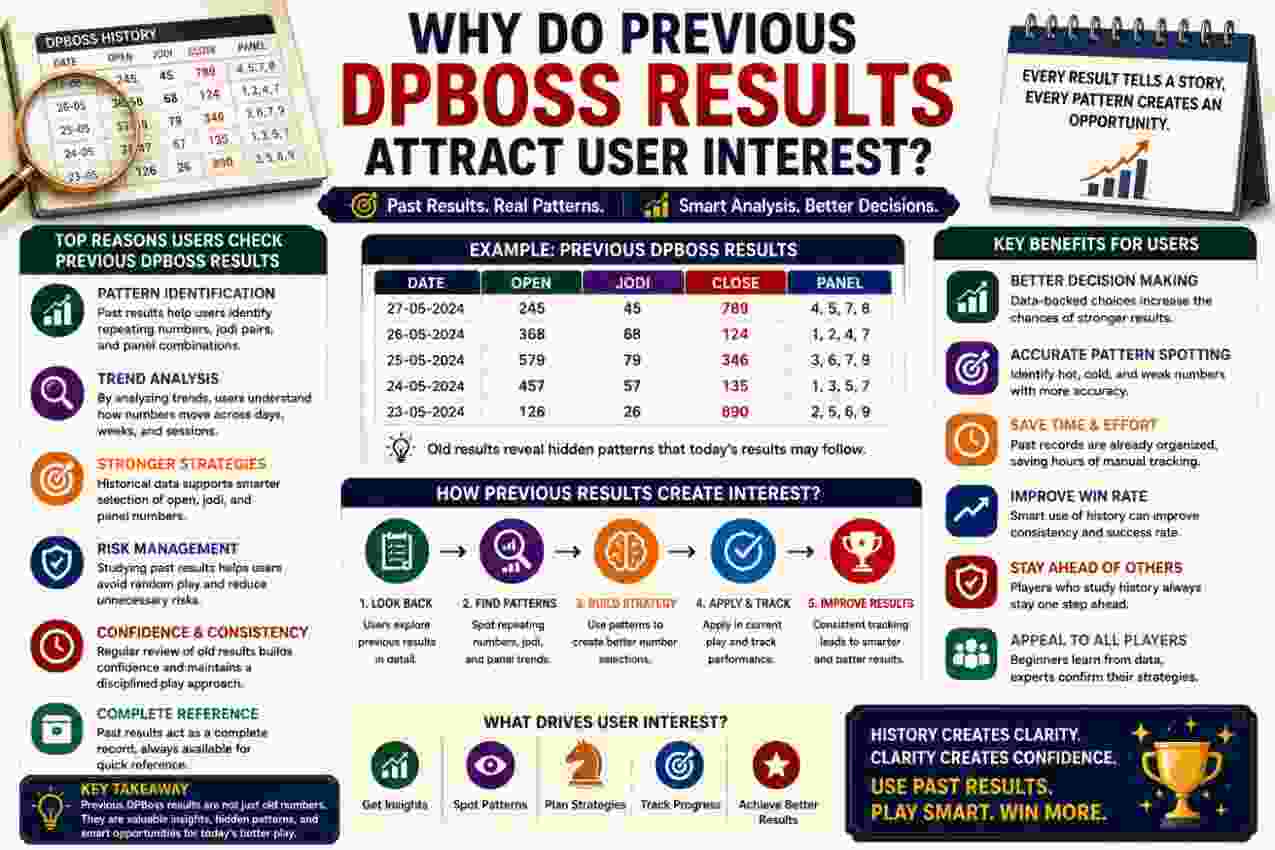
Previous Dpboss results attract attention because historical records give users a structured way to check earlier outcomes, compare dates, verify numbers, and follow recurring result formats. Archived information often feels more useful than isolated entries because it places individual results within a larger chronological record.
Moreover, users frequently return to previous results when they miss an update or want to confirm a remembered number. Historical records can satisfy curiosity and support accurate record checking. However, past outcomes remain historical information. They cannot provide certainty about future results or guarantee that earlier numerical sequences will repeat.
What Are Previous Dpboss Results?
Previous Dpboss results refer to numerical outcomes recorded before the latest available result. Depending on the format, historical records may include dates, opening values, closing values, panels, singles, jodis, or other commonly displayed numerical combinations.
Instead of disappearing after publication, these records can remain arranged chronologically. Consequently, users can check information from earlier days, weeks, months, or longer periods without relying on memory.
Historical Results Create a Numerical Archive
An archive places earlier results in a logical sequence. Users can locate a particular date and then check the numerical information associated with that period.
Additionally, chronological organization makes older information easier to navigate. A person searching for a result from several days earlier does not need to inspect unrelated entries randomly.
The archive may also help users distinguish between:
- Recently recorded outcomes
- Older numerical entries
- Opening and closing results
- Different result dates
- Panel and single formats
- Complete and incomplete records
Therefore, historical organization remains one of the strongest reasons previous results receive continued attention.
Previous Results Differ From Current Updates
Current results focus on the latest available information, whereas previous results preserve what appeared earlier. Both formats serve different informational purposes.
A current update answers an immediate checking need. In contrast, an older record helps someone confirm what happened on a particular date or review a sequence of previously published outcomes.
This difference explains why historical pages can remain relevant even after newer results become available.
Why Do Users Keep Checking Previous Results?
Interest in historical data often comes from practical needs rather than one single motivation. Some users want verification, while others want chronological context or an easier way to compare records.
Furthermore, archived results allow readers to return to information they may have missed when it first appeared.
Users May Want to Verify an Earlier Result
Verification represents a major reason people check historical records. Someone may remember part of an earlier number but want to confirm the complete entry.
For example, a reader might remember a single digit but forget the associated panel. Alternatively, someone may remember a result but remain uncertain about its date.
Historical records solve this problem by connecting numbers with their corresponding periods. Therefore, users can verify information without depending entirely on memory.
Users May Have Missed an Earlier Update
Not everyone checks results when they first appear. Work schedules, personal commitments, internet access, or simple forgetfulness can cause someone to miss an update.
Consequently, archived Dpboss results provide a convenient way to check what appeared previously. Instead of treating an older result as inaccessible information, users can locate it within the historical sequence.
This convenience naturally encourages repeat visits to archived records.
Users Often Want Context Around a Result
An isolated number provides limited context. However, a chronological record shows what appeared before and after a particular entry.
That broader view can make historical information easier to interpret. Moreover, readers can determine whether they selected the correct date and result category.
Context does not make future outcomes predictable, but it makes past records easier to organize and verify.
The Role of Curiosity in Historical Result Checking
Human curiosity strongly influences how people interact with numerical records. When several outcomes appear together, users naturally notice repetitions, differences, and unusual combinations.
Consequently, historical Dpboss records can hold attention longer than a single result. Readers may continue scanning because each row adds another piece of past information.
Repeated Numbers Naturally Draw Attention
When the same digit appears several times, it can stand out visually. Similarly, comparable panel combinations or recurring endings may capture attention.
Users may consequently spend more time reviewing previous records to see how frequently a particular value appeared.
However, repetition does not establish a reliable forecasting relationship. Random or uncertain outcomes can produce clusters and repeated values without creating a dependable future sequence.
Unusual Combinations Can Increase Curiosity
Certain combinations may look distinctive because they contain repeated digits, ascending numbers, descending numbers, or visually balanced structures.
For instance, a three-digit panel with similar numerals can appear more memorable than an irregular combination. Therefore, users may search historical records to see whether comparable structures appeared earlier.
Such curiosity explains part of the appeal of archived numerical information without making those combinations predictive.
Historical Records Make Result Verification Easier
Reliable record checking requires more than remembering a number. Users also need the correct date, category, and result position.
Previous Dpboss results usually organize these elements together. As a result, readers can cross-check several pieces of information within the same historical entry.
Dates Give Numbers Essential Context
A numerical result means little as an archive entry without an associated period. Dates separate one result from another and prevent identical numbers from becoming confused.
Moreover, the same combination can appear at different times. A date allows readers to identify the specific occurrence they want to check.
Users should therefore begin with the date before moving across the corresponding result row.
Structured Columns Reduce Confusion
Historical charts commonly separate different result components into columns or defined positions. Such formatting can distinguish opening information from closing information and panels from single digits.
Consequently, structured presentation helps readers avoid combining unrelated values.
A clearly arranged historical record may include:
- Date or weekday
- Opening panel
- Opening single
- Closing single
- Closing panel
- Other associated result fields
This structure turns a collection of numbers into an organized reference record.
Why Chronological Data Appeals to Users
Chronological information creates a natural reading path. People can start with a particular date and move forward or backward through previous entries.
Moreover, ordered data makes comparison easier. Readers do not need to reconstruct the sequence manually because the archive already establishes the relationship between dates.
Users Can Follow Results Across Multiple Dates
A chronological archive makes it possible to check several periods during one session. Someone searching for Monday's result may also look at Sunday, Saturday, or earlier entries.
This behavior can increase engagement with previous Dpboss results because every historical row connects naturally with surrounding records.
Additionally, chronological presentation helps users notice whether information is missing from a particular period.
Older Records Remain Accessible
The value of an archive increases when users can return to it after significant time has passed. An earlier result may become relevant again because someone needs verification or wants to check a forgotten detail.
Therefore, older data can continue attracting attention even when it no longer represents the latest update.
Accessibility transforms temporary information into a reusable historical resource.
Pattern Recognition Influences User Interest
People naturally search for order within numerical information. When they see a long sequence of results, they may notice repeated digits, alternating values, gaps, or similar combinations.
This tendency makes historical records visually engaging. Nevertheless, apparent patterns require careful interpretation.
Why Numerical Patterns Look Meaningful
The human mind quickly recognizes repetition. If a digit appears several times within a short sequence, readers may give that repetition greater importance than isolated values.
Similarly, a long absence can make a later appearance seem significant. However, visual significance does not prove predictive significance.
Historical data shows what happened previously. Therefore, readers should separate observation from forecasting claims.
Coincidence Can Resemble a Pattern
Random sequences frequently produce clusters, repeated numbers, and apparent rhythms. A short sample can make such coincidences look particularly meaningful.
For that reason, historical Dpboss results should not be treated as evidence that a particular combination must appear next.
A visible sequence can support historical comparison, but it cannot guarantee a future outcome.
Previous Results Support Record Comparison
Comparison represents another major attraction of archived data. Users can place different dates beside one another and examine how recorded values differ.
Furthermore, comparison makes it easier to verify whether two remembered results actually occurred during the periods associated with them.
Comparing Different Dates
Historical records allow readers to check one date against another without relying on separate notes. This capability becomes particularly useful when users need information from multiple periods.
For instance, someone might compare opening values across several dates or check whether a specific panel appeared previously.
Such comparison remains factual when it focuses on recorded history rather than predictions.
Checking Different Result Components
A complete historical entry may contain several connected components. Therefore, users can compare more than one type of numerical information.
They may check panels against associated singles or distinguish opening information from closing information.
This ability gives historical records greater informational depth than a simple list containing only one number per date.
Why Clear Formatting Increases User Interest
Presentation strongly affects how easily people can use historical information. Large collections of unstructured numbers quickly become difficult to read.
In contrast, dates, columns, spacing, and consistent formatting allow users to locate information efficiently. Consequently, well-structured historical results can encourage longer and more frequent checking.
Readable Layouts Save Time
Users generally want to locate a specific record without scanning every number manually. Clear layouts support that goal by creating predictable positions for dates and numerical fields.
Once readers recognize the structure, they can move directly toward the information they need.
Moreover, consistent formatting reduces the mental effort required to interpret each new row.
Mobile-Friendly Presentation Matters
Many readers access numerical records on smaller screens. Dense rows can become difficult to follow when columns overlap or require excessive movement.
Therefore, clean spacing and clear separation between entries improve usability. Readers should also take extra care to maintain row alignment when viewing wide historical charts on compact screens.
A readable presentation supports accurate checking regardless of device size.
Historical Data Can Encourage Repeat Checking
Previous results do not lose all relevance when a new result appears. Instead, every new entry can become another part of the historical archive.
Consequently, users may return repeatedly to verify dates, compare entries, or review records they previously overlooked.
New Results Eventually Become Previous Results
Historical archives continually expand as additional outcomes become available. The latest result eventually moves into the previous-results category.
This ongoing process gives archived information a dynamic quality even though each individual entry remains fixed.
Moreover, users who regularly check current information may later return to those same entries for verification.
Familiar Structure Supports Repeat Use
Once readers become familiar with a chart layout, they can navigate it more efficiently. They know where dates appear, where panels sit, and how different values relate visually.
That familiarity can make repeated historical checking easier.
However, convenience should not encourage assumptions that repeated viewing reveals guaranteed future outcomes.
The Difference Between Historical Records and Predictions
Previous Dpboss results provide factual information about earlier outcomes. Predictions, however, make claims about events that have not yet occurred.
Separating these two concepts protects readers from treating archived numbers as certainty about future results.
Past Results Confirm What Already Happened
Historical records can answer questions about completed outcomes. They can show which number appeared, when it appeared, and how the result was formatted.
Therefore, their strongest value lies in verification and record keeping.
They cannot change from historical evidence into guaranteed forecasting tools simply because someone compares many entries.
Past Frequency Does Not Guarantee Repetition
A number that appeared frequently before does not necessarily become more likely to appear again. Likewise, a number absent for a long period does not automatically become due.
This distinction matters because frequency tables and historical charts can create strong visual impressions.
Consequently, users should treat frequency as a description of the past rather than a promise about the future.
How Users Can Read Previous Results More Carefully
Careful reading improves the value of historical records. Instead of scanning random numbers, users can follow a simple verification process based on dates, columns, and complete entries.
Additionally, methodical checking reduces errors caused by similar-looking combinations.
Check the Date First
Always identify the relevant date before reading the associated numerical fields. This step prevents users from accidentally selecting a result from the row above or below.
After locating the date, readers can move horizontally through the same entry.
Identify the Correct Result Type
Different numerical formats may appear within one historical chart. A panel, single, and jodi do not represent the same thing.
Therefore, readers should confirm the relevant column before recording or comparing a value.
Clear identification also prevents a three-digit combination from being mistaken for several unrelated single values.
Verify the Entire Entry
A partial memory can create confusion. Instead of checking only one digit, users should review the complete historical entry when possible.
For better accuracy, check:
- The correct date
- The relevant row
- The result category
- Opening or closing position
- Complete numerical combination
- Any missing or blank fields
This process makes historical verification more dependable.
Responsible Interpretation of Previous Results
Historical numerical data can be informative without serving as a forecasting system. Responsible interpretation focuses on what the records actually demonstrate.
Moreover, separating documented outcomes from assumptions helps users avoid giving accidental patterns more significance than they deserve.
Use Records for Historical Checking
Archived Dpboss results work best as reference information. They can help readers verify dates, compare previous entries, and identify the structure of earlier outcomes.
This approach keeps attention focused on information that the records can genuinely provide.
Avoid Treating Sequences as Guarantees
A sequence may look convincing after several similar results appear close together. Nevertheless, historical similarity cannot establish certainty about an unknown future outcome.
Users should therefore avoid treating repetition, gaps, frequency, or visually attractive combinations as guaranteed signals.
Conclusion
Previous Dpboss results attract user interest because they combine accessibility, chronological organization, verification value, and numerical curiosity. Users can return to archived records to check missed outcomes, confirm dates, compare earlier entries, and review different result components in a structured format.
Moreover, historical data remains useful long after its initial publication because archived information supports accurate record checking. Still, past outcomes document completed events rather than future certainty. Repetitions, gaps, frequencies, and apparent sequences can attract attention, but they cannot guarantee later results. Careful interpretation keeps previous records useful, clear, and appropriately focused on historical information.
FAQs
Why do people check previous Dpboss results?
People commonly check previous Dpboss results to verify earlier outcomes, locate information they missed, compare dates, and review historical numerical records. Archived data places older results into an organized sequence, making individual entries easier to locate. Curiosity about repeated numbers and previous combinations can also encourage historical checking.
Can previous results show what will happen next?
Previous results show only outcomes that have already occurred. Although readers may notice repeated digits, gaps, clusters, or apparent sequences, those observations cannot guarantee a future result. Historical frequency describes earlier records rather than future certainty, so users should avoid treating archived numerical patterns as dependable predictions.
Why are dates important when checking old results?
Dates connect each numerical entry with its correct historical period. Without them, users could easily confuse identical or similar results recorded at different times. Checking the date first also helps readers remain aligned with the correct row, opening value, closing value, panel, or other displayed result component.
Why do repeated numbers attract attention?
Repeated numbers stand out because people naturally recognize visual similarities and recurring sequences. Consequently, readers may spend additional time checking whether the same digits appeared on earlier dates. However, repetition within historical records can occur naturally and does not prove that the same number will appear again in a future outcome.
What is the safest way to interpret historical results?
Treat historical results as records of completed outcomes. Check dates, result categories, row alignment, and complete numerical entries before making comparisons. Moreover, distinguish factual historical information from assumptions about future outcomes. This approach preserves the practical value of archived records while avoiding unsupported conclusions based on apparent numerical patterns.