
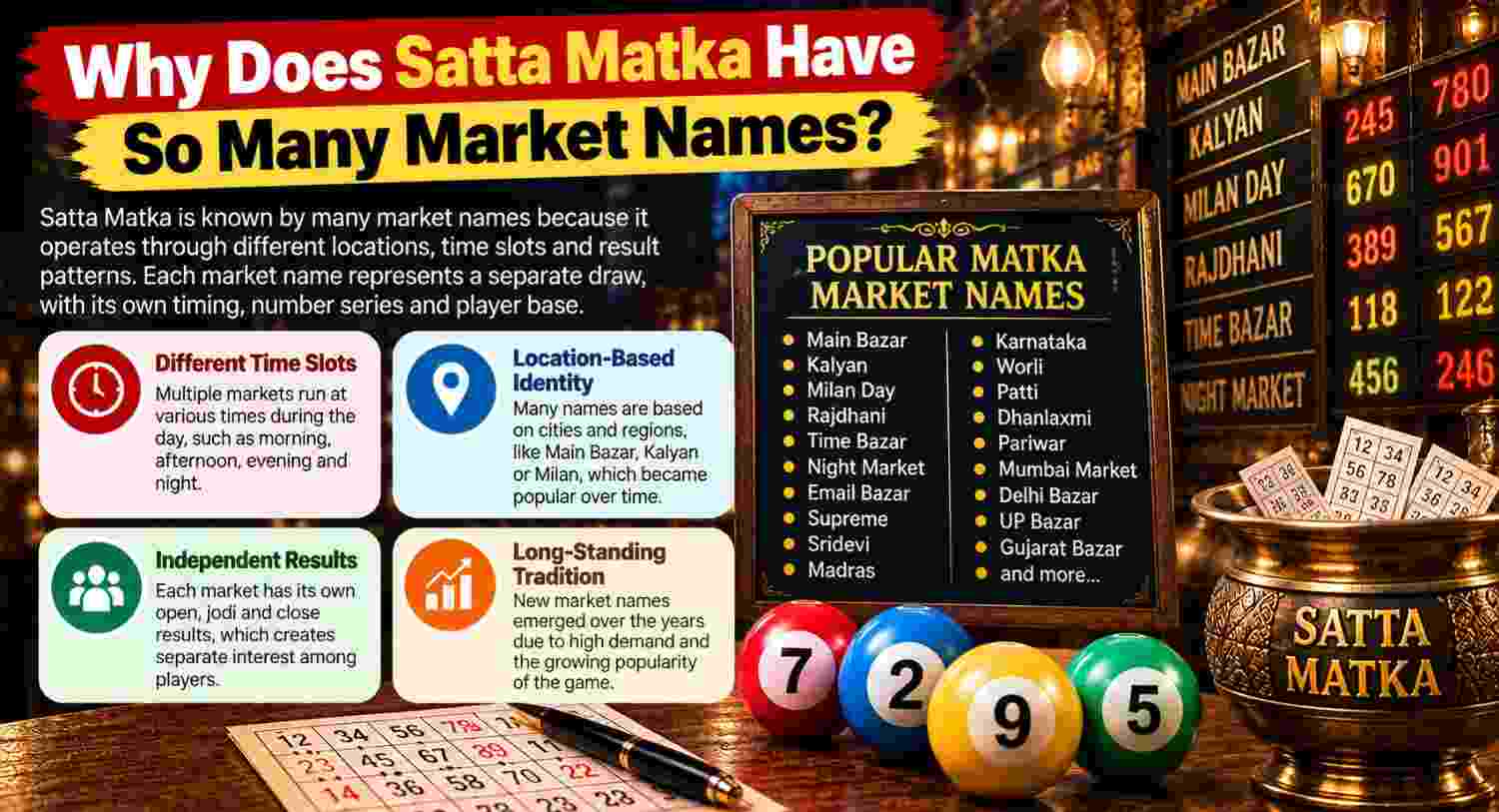
Multiple market names developed because satta matka never operated as one unified betting market. Separate organisers, local networks, result sessions and schedules created distinct identities within the number-based system. Over time, familiar labels became shorthand for particular result streams rather than alternative names for one central operation. Some names reflected historical associations, while others emerged from later variants. As communication shifted from physical networks to digital listings, these identities often remained visible. Consequently, the variety reflects historical fragmentation, continuity and adaptation.
What a “Market” Actually Identifies?
Within this context, a market refers to a recognised betting session, result stream or operating identity. It does not necessarily mean a physical marketplace. Historically, the name helped distinguish one organised stream from another, especially when operators announced results at separate times.
The broader activity and the individual market therefore serve different purposes. Satta matka names the wider form of number-based gambling, while a market name identifies a narrower operation or result sequence. A market name is also different from a result: the name identifies the relevant stream, whereas the result is the numerical outcome associated with it.
How Separate Market Identities Developed
The naming pattern grew from the way the activity expanded. After earlier cotton-rate betting in Bombay gave way to locally generated number systems, organisers did not create one centrally controlled replacement. Instead, separate operations emerged and acquired recognisable labels. Historical reporting commonly places this transition after the earlier cotton-rate system declined.
Several factors encouraged those identities:
- independent organisers ran separate operations;
- opening and closing sessions occurred at different periods;
- local communities recognised particular names;
- result streams developed their own routines;
- established labels continued after operating methods changed.
Consequently, participants could distinguish one stream from another without treating every operation as a completely different form of gambling. A familiar label functioned as an identifier attached to a schedule, history or organisation.
Historical accounts do not always establish who created every name or when each label appeared. Informal operation, limited records and later retellings make some origins difficult to verify. Therefore, broad naming patterns are often easier to establish than precise stories behind individual labels.
Why Schedules Became Part of Market Identity
Timing helped reinforce separation between markets. Many operations followed their own opening and closing periods, so a name became associated with a particular result session as well as an organiser or historical lineage. Different operating windows allowed multiple markets to coexist without appearing as one continuous sequence.
At a high level, market identities could differ through:
- separate opening periods;
- separate closing periods;
- distinct result sessions;
- different operating days or windows.
These distinctions explain why two markets may use similar number terminology while remaining independently recognised. However, historical descriptions should not be treated as current betting timetables. Schedules can change, and providing actionable timings would shift an educational explanation into gambling facilitation.
How Older Names Remained Recognisable
Repeated use gave certain market labels durability. Once a name became linked with a particular result stream, local network or operating period, people could continue using it even after methods changed. In that sense, the name acted as a historical identifier rather than a precise description of the mechanism being used.
Communication methods changed over time. Physical collection points and face-to-face networks gave way in many settings to telephone communication, printed result sheets, messaging channels and online publication. Nevertheless, established labels could survive those transitions because recognition attached to the identity, not solely to the communication method.
An old name may therefore appear beside newer labels on digital result pages. Online visibility does not prove that the internet created the market. In many cases, digital publishing grouped existing or inherited names together, making the variety more visible than within local networks.
Why Similar-Sounding Names Appear
Not every similar name points to the same operation. Related wording can arise from regional adaptation, imitation, later variants or association with a familiar identity. A modified label may indicate a separate result stream rather than a renamed older market.
Precise origins can remain uncertain, especially where informal operators left little reliable documentation. Therefore, claims about ownership, succession or direct lineage need careful qualification. Similar terminology alone does not establish that two named markets share the same organiser, history or rules.
Likewise, different names do not automatically mean completely different games. Several markets may share broad features such as number-based results and open-close terminology while differing in schedule, identity, local recognition or operating structure. Shared conventions create resemblance; separate histories and result streams create distinction.
What Digital Listings Changed
Digital publication increased the visibility of market names by placing labels together that previously circulated through separate local channels. Consequently, someone encountering the subject online may see many names and assume that one organisation created separate games.
That assumption can be misleading. Some labels may have historical roots, while others may reflect later adaptations, derivative identities or regional usage. Moreover, digital pages can reproduce names without clarifying their origins. The internet amplified visibility and duplication more than it standardised naming.
The number of recognised names can also change. Older operations may disappear, local labels may gain wider recognition, and modified names may emerge. Because no single permanent naming authority governs the informal ecosystem, any supposed definitive list can become incomplete or outdated.
Legal and Social Context in India
Gambling regulation in India depends on jurisdiction, applicable legislation and the nature of the activity. The Public Gambling Act of 1867 remains part of the historical legal framework in certain jurisdictions, while several states have enacted their own gambling laws. Consequently, legal treatment is not uniform across the country.
Number-based wagering associated with satta matka has generally operated outside authorised gambling structures. However, legal conclusions should account for the state or Union territory involved and the law currently in force. Historical explanations of market names therefore should not be mistaken for statements that participation is permitted.
Conclusion
Satta matka has many market names because separate operations, schedules and local identities developed within a broader betting system rather than one central structure. Historical labels often survived changes in organisers and communication methods, while newer variants added further names. Digital listings made the fragmented naming system more visible. Therefore, a market name usually identifies a recognised stream or operating tradition, not an entirely separate gambling concept. The variety reflects decentralised development and historical continuity.