
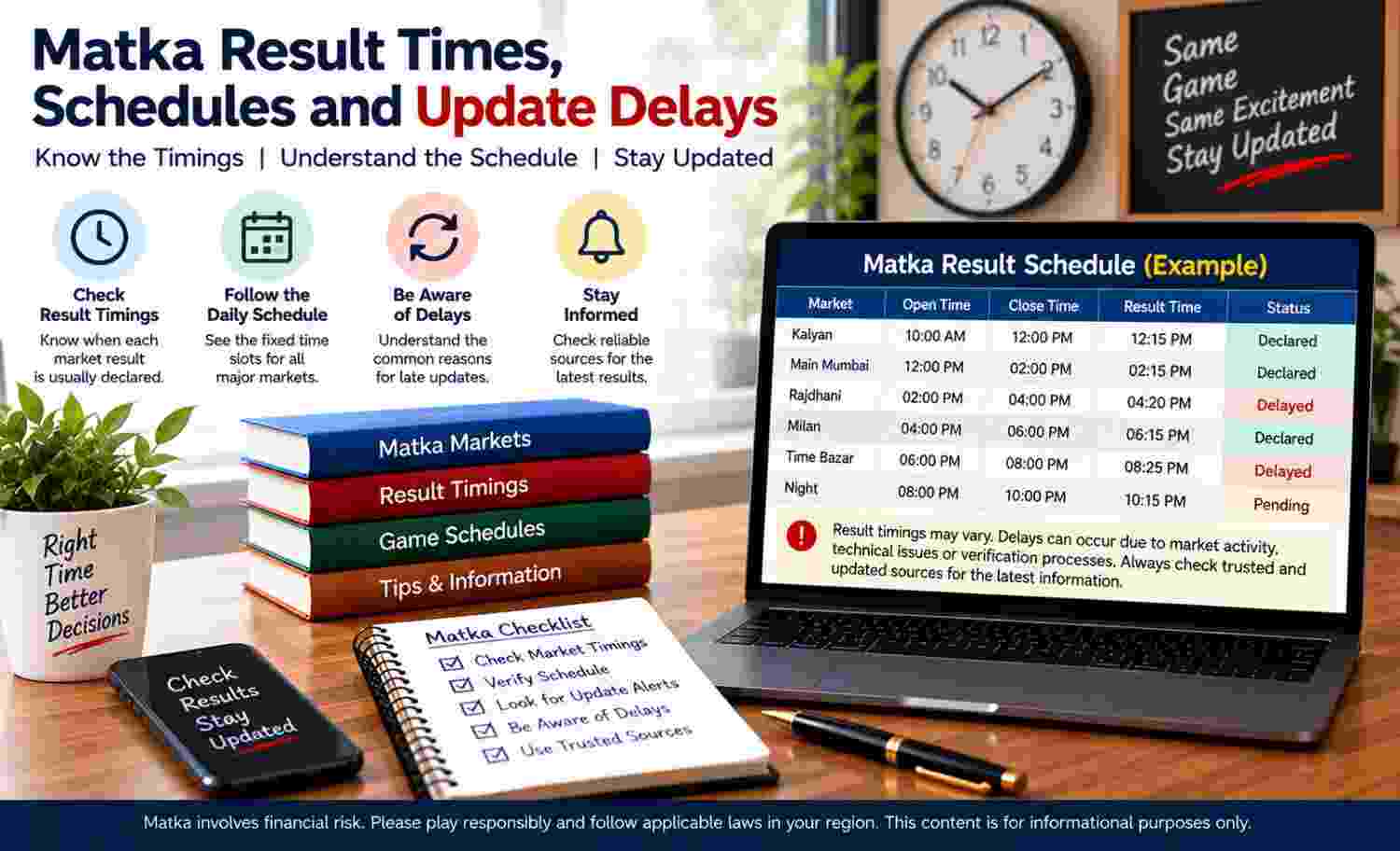
“Result time” can describe a scheduled market time, an opening declaration, a closing declaration, or the later moment when a third-party page displays information. These events do not necessarily coincide. A reliable interpretation depends on the exact market, date, result stage, stated time zone, and freshness of the displayed update. Consequently, a single time copied from a search snippet or old chart may give a false impression. Readers should examine the page context before treating any listed time as current.
What Matka Result Time Actually Refers To?
People often use one phrase for several separate events. On a page associated with the search term DPBoss, a displayed time might describe a planned schedule, a declaration stage, or merely the moment when the page copied information from elsewhere. The label and surrounding context determine its meaning.
Five Different Clocks Can Appear
A market schedule indicates when an event usually occurs. A betting-window time relates to the period during which an operator accepts participation; this discussion does not provide operational details. A declaration time concerns the release of information. A website-update time records when a publisher changed its display. Finally, an archive timestamp may identify an older record rather than a current update.
These clocks can differ by minutes or longer. For example, a listed schedule may remain unchanged while a website experiences a delayed refresh. Likewise, a page may show a newly loaded timestamp even though the underlying entry belongs to an earlier date. Readers should therefore connect every time with its label, market, stage, and date.
Why No Universal Time Exists
Different markets may follow separate opening and closing schedules, operating days, holiday arrangements, and publication practices. A page that groups several market labels can consequently show several times. It does not necessarily announce one platform-wide result time.
Schedules may also change because an activity pauses, operating arrangements shift, or a publisher revises its listing. Historical consistency does not guarantee a future time. Without reliable, current, market-specific confirmation, the defensible answer remains conditional: check the particular market entry and its dated status rather than relying on a general time found elsewhere.
Opening, Closing and Complete Displays
Result pages commonly separate information into stages. Recognising those stages helps readers identify why a row appears incomplete without requiring any knowledge of number selection, payouts, or wagering.
Opening and Closing Are Separate Stages
An opening result represents an earlier declaration associated with a market entry. A closing result represents a later stage. Some pages then combine both stages into a complete display. The opening stage can appear while the closing field remains blank, marked as pending, or filled with a placeholder.
That partial display does not, by itself, prove an error. It may simply mean that the later stage has not appeared on that page. Conversely, a filled row does not prove freshness. The entry could belong to a previous date, an archive, or a copied source. Readers must examine the date and status alongside the visible values.
Scheduled Time Versus Actual Publication
A schedule states an expectation; it does not certify the exact minute when information will reach every reader. Publication involves several steps, and each step can add delay or create an apparent mismatch.
Why an Update May Arrive Late
A publisher may enter information manually, check a source, correct formatting, or wait for missing details. Technical conditions can also affect delivery. Common causes include:
- manual updating or verification;
- heavy server demand;
- an internet or hosting interruption;
- browser, server, or search caching;
- maintenance or a software fault;
- a formatting mistake;
- changed market operations.
None of these possibilities proves why a specific delay occurred. More importantly, a delay does not predict any number or establish manipulation. Readers should treat unexplained claims in forwarded messages or comment threads as rumours unless credible evidence supports them.
How to Read a Result Page Carefully
Page interpretation requires context, not just a prominent number or time. A reader should inspect the complete row, nearby headings, and status labels before deciding what the display represents.
Check the Identity and Date First
Several markets may use similar names, abbreviations, or spelling variations. A person who reads the wrong row can mistake another market’s schedule for the intended one. Verify the full market label, not merely its first word or initials.
Next, compare the displayed date with the relevant calendar date and day of the week. Confirm whether the market operates on that day if the page supplies that information. A repeated old value, unchanged timestamp, or mismatched weekday should prompt caution. Do not assume that a top position on the page means the entry is current.
Why Search Snippets Can Be Outdated
Search engines usually display indexed fragments rather than a guaranteed live view. Their titles, descriptions, and extracted times may lag behind changes on the destination page.
A snippet can preserve an old schedule, archive date, or page fragment after the live page changes. The visible time might describe indexing, publication, or unrelated text instead of a current result. Search systems may also combine a page title with text taken from another section, removing the context that explained the time.
Time Zones, Devices and Operating Days
Apparent timing differences sometimes come from display settings rather than a changed declaration. Pages do not all state their time zone clearly, so readers should avoid assuming that every listed time uses Indian Standard Time.
Location and Device Settings Matter
A device may convert a timestamp according to its own region. Travel settings, a virtual private network, browser preferences, or server configuration can also affect how a page renders dates and times. In contrast, a plain text schedule may remain fixed and offer no automatic conversion.
Closures and Schedule Changes
Some markets may not operate every day. Holidays, maintenance, closures, or operational changes may also interrupt a familiar pattern. An absent entry could therefore reflect a non-operating day, delayed publication, changed arrangements, or a technical fault.
Readers should not invent an explanation from silence. Check whether the page identifies the day, a closure, or a revised schedule. If it offers no dated notice, acknowledge the uncertainty. An old timetable cannot establish that the same arrangements remain in force.
Handling Blank, Partial or Missing Updates
A blank field has several possible meanings. It may mark a pending stage, a failed update, a non-operating day, missing source information, or a layout error. A placeholder carries equally limited information.
Use a verification sequence that focuses on page status:
- Confirm the exact market label and date.
- Identify whether the opening or closing stage remains pending.
- Check the day and any operating-status notice.
- Refresh once and look for a genuinely changed timestamp.
- Separate the current panel from archived material.
- Treat repeated old values and copied screenshots cautiously.
- Wait for a clearly dated update instead of relying on rumours.
Historical Charts Cannot Predict Future Outcomes.
An archive records earlier entries, while a current panel claims to show a present update. A previous-result label usually points to the latest completed older entry. A historical chart may cover a longer period. These categories serve different page functions.
Past results do not predict a future random outcome. Repetition, visual patterns, or gaps in a chart do not create a dependable selection method. This piece therefore offers no pattern analysis or number interpretation. Readers should use historical dates only to identify whether content is old, not to support a wager.
Limits of Third-Party Result Pages
Third-party pages may aggregate, copy, or republish material. Professional design, rapid animation, or a prominent ranking does not prove authorisation, independence, accuracy, or lawful operation.
Imitation Pages and Fraud Signals
Copied branding and altered spellings can make unrelated pages look familiar. Sponsored listings, social posts, and messaging forwards may also lead to imitation domains. Before trusting page context, readers should:
- inspect the domain spelling carefully;
- avoid unknown files and unsolicited applications;
- refuse unnecessary notifications, contact, or device permissions;
- avoid entering payment details on an unverified page;
- treat urgent payment demands as warning signs;
- never share identity documents or one-time passwords;
- close pages that trigger repeated redirects.
These checks reduce exposure, but they cannot certify a page. A familiar appearance may come from copied images or layouts.
Payment, Identity and Device Risks
Unofficial gambling-related pages can expose visitors to deposit fraud, impersonation, phishing, withdrawal disputes, identity theft, unauthorised transactions, and persistent payment requests. A public result display does not need a bank password, card PIN, one-time password, remote-device access, or identity-document upload merely to show public information.
Legal Position and Responsible Conduct in India
Availability does not prove legality. Indian gambling law can depend on the state, activity, platform, and participation method.
Avoid Nationwide Assumptions
No reader should treat a result page’s accessibility as permission to gamble. Likewise, a general statement cannot settle the legal position for every state or activity. Anyone needing advice about a specific situation should consult a qualified local legal professional who can assess current law and relevant facts.
This information does not advise anyone how to avoid restrictions, conceal activity, or access blocked services. Laws and regulatory measures can change, so an outdated claim or promotional assurance should not replace current professional advice.
Financial Harm and Warning Signs
Matka involves financial risk, and past results cannot predict future outcomes. Timing discipline cannot remove chance or guarantee a return. Warning signs of harm include:
- chasing losses or increasing stakes after a loss;
- borrowing money to gamble;
- hiding spending from family members;
- missing rent, food, medical, or other essential payments;
- relying on gambling as income;
- repeatedly trying to recover money quickly;
- experiencing distress linked to results.
A person who recognises these signs can pause financial access, speak with someone trusted, and seek help from a qualified local health or financial professional. Support should remain confidential, respectful, and free from judgement.
Safeguarding Minors
Minors should never participate in gambling. Adults should protect payment credentials, restrict access to gambling-related accounts and devices, and avoid sharing promotional material with children. Because age rules can depend on jurisdiction and activity, a website’s age statement does not establish a universal minimum. Families should discuss misleading claims calmly and support any vulnerable person experiencing financial pressure, impaired control, anxiety, or related distress linked to gambling.
Result-Time Verification Checklist
Before treating a listing as current, use this concise check. It helps identify context and risk without validating the gambling activity itself.
- Match the exact market label, including spelling and abbreviations.
- Confirm the current date and relevant day of operation.
- Identify opening, closing, complete, or pending status.
- Read the visible timestamp together with its date.
- Verify the stated time zone, if the page provides one.
- Separate a current section from an archive or previous result.
- Consider whether browser or search caching shows an older copy.
- Inspect the domain for altered spelling or imitation signals.
- Leave if the page pressures you to pay, download, or share credentials.
- Remember that operating and publication schedules can change.
No checklist can turn an unofficial page into an authoritative source. However, these checks can prevent a reader from confusing an old, partial, or mislabelled entry with a current update.
Conclusion
No universal matka result time applies across every market, stage, operating day, or third-party display. An opening declaration may appear before a closing declaration, while publication and caching can create further delay. Readers should verify the full market label, date, stage, time zone, update timestamp, and whether the page contains current or archived information. They should also remember that gambling carries financial risk and may raise different legal issues across Indian states.
FAQs
Does every matka market publish results at the same time?
No. Individual markets may follow different opening schedules, closing schedules, operating days, and publication practices. A page containing several market rows may therefore display several times. Readers should match the complete market label, date, stage, and time zone rather than relying on one general time shown elsewhere.
How do opening and closing result times differ?
The opening time relates to an earlier declaration stage, while the closing time relates to a later stage for the same market. A page may show the opening entry first and leave the closing field pending. Some pages combine both only after the later stage appears.
Why can a result appear after its listed schedule?
The listed time may describe an expected event rather than the website’s publication time. Manual checks, server demand, connectivity problems, caching, maintenance, formatting corrections, or changed operations can delay display. A delay does not predict an outcome or prove misconduct without credible supporting evidence.
How can a reader check whether a result is current?
Check the complete market name, calendar date, weekday, opening or closing label, visible timestamp, time zone, and section heading. Confirm that the entry sits in a current panel rather than an archive. Treat repeated values, missing dates, conflicting rows, and unchanged timestamps with caution.
Why might a search result show an old time?
A search engine may retain an indexed title, description, or text fragment after a page changes. The snippet may quote an archive, an old schedule, or an indexing date without useful context. Readers should inspect the live page’s date and labels, while recognising that access alone proves no authority.
Do matka schedules stay identical every day?
Not necessarily. Markets may have different operating days, and arrangements may change because of holidays, closures, maintenance, or operational decisions. Never infer a current schedule solely from an old chart or repeated pattern. Where a page lacks a clearly dated notice, acknowledge that the timing remains uncertain.
What can a blank or partial result indicate?
A blank field may mark a pending closing stage, non-operation, delayed publication, missing source information, or a technical error. A placeholder offers no reliable explanation by itself. Confirm the market, date, stage, operating notice, and timestamp; then wait for a clearly dated change rather than trusting rumours.
Can historical charts predict the next result?
No. Historical charts record earlier entries; they do not provide a dependable method for predicting a future random outcome. Apparent repetitions or gaps cannot guarantee what follows. Use archive dates only to distinguish older material from a current update, not to choose numbers or support a wager.
What signs may identify a fake result page?
Warning signs include altered domain spelling, copied branding, repeated redirects, forced downloads, unnecessary permissions, missing ownership details, urgent payment demands, and requests for passwords or one-time codes. A polished design does not establish accuracy. Close suspicious pages and avoid sharing financial, identity, or device-access information.
Does viewing a result page prove that gambling is legal?
No. Website availability does not establish legality, authorisation, or permission to participate. The legal position in India can vary by state, activity, platform, and participation method. Anyone facing a specific legal question should seek advice from a qualified local professional based on current law and facts.