
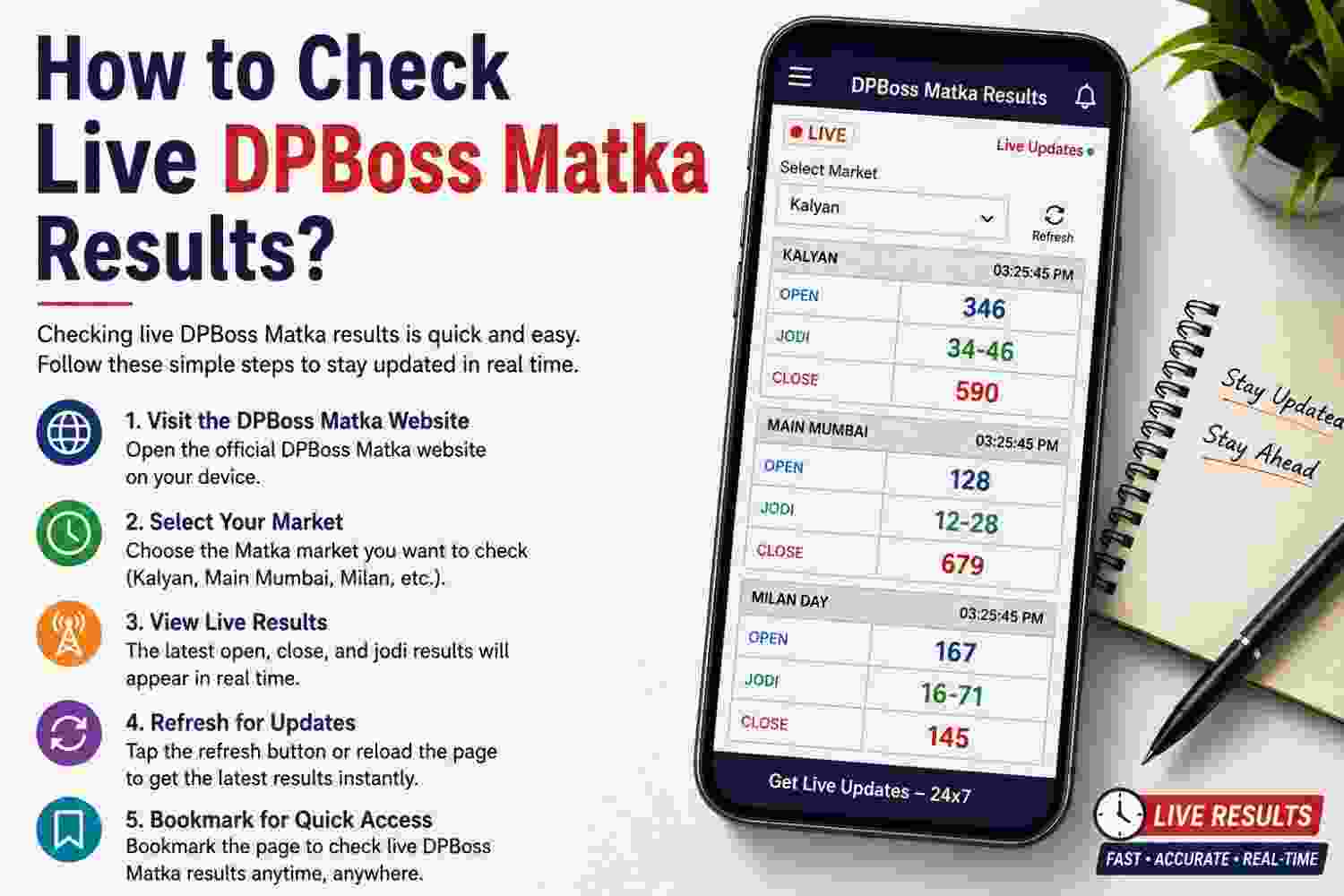
Checking live DPBoss Matka results requires attention to the market name, result stage, number format, and displayed timing. A result may appear in separate opening and closing stages, so an early figure does not always represent the completed entry. Readers should also distinguish live information from archived records, pending fields, and corrected entries. A structured checking process reduces confusion when several numerical fields appear together. Most importantly, live-result pages record numerical outcomes; they do not provide a reliable method for predicting later results from previous numbers.
Why Live Result Checking Requires Attention?
Live Results Can Appear in Stages
A live display may update when the opening information becomes available and change again after the closing information appears. Therefore, the first visible update can represent only part of the session.
If a Jodi requires both an opening and closing digit, readers should wait until both positions appear before treating the pair as complete. Meanwhile, a blank closing field can indicate that the session remains unfinished.
Several Markets Can Appear Together
Result displays may contain multiple market names or sessions on one screen. Similar formatting can make adjacent rows easy to confuse.
Before reading any number, confirm the market label. Additionally, follow the same row across the display rather than moving vertically into another result. This simple check prevents many transcription errors.
Start by Identifying the Correct DPBoss Matka Result
The first step involves locating the intended result rather than selecting the newest-looking number. A structured display may contain current entries alongside older results, so readers should verify context first.
Confirm the Market or Session Name
Read the market heading attached to the numerical entry. Do not assume that the first result on the page belongs to the session being checked.
Similarly, avoid identifying a result solely by its timing. Different sessions can appear near one another, and their scheduled stages may overlap.
A reliable check begins with three details:
- Correct market or session label
- Correct date
- Correct result row
Once these elements match, the numerical fields become easier to interpret.
Verify the Date Before Reading Numbers
A live page may retain an earlier completed result until a new session starts or finishes. Consequently, the most prominent number is not necessarily associated with the current date.
Check the date beside the result whenever the layout provides one. If dates appear only in a separate chart, compare the latest record carefully before assuming that a displayed number belongs to a newer session.
Know the Main Number Formats
DPBoss Matka displays can contain single digits, two-digit Jodis, and three-digit panels. These formats serve different roles, so readers should identify the number type before recording anything.
Single Digit
A single contains one digit from 0 through 9. It can represent the opening or closing single associated with a session.
Because the same digit can appear in several places, its position matters. For example, an opening single and a closing single may happen to match, but they still occupy different roles.
Jodi
A Jodi contains two ordered digits. Generally, the first position corresponds to the opening single and the second corresponds to the closing single.
Therefore, 27 differs from 72. Likewise, 04 must remain 04 because removing the leading zero changes the displayed format.
A Jodi should contain both positions before readers treat it as complete.
Panel, Patti, or Panna
A panel commonly contains three digits. Depending on the vocabulary used by the display, readers may also encounter names such as Patti or Panna for three-digit combinations.
These figures should not be confused with the two-digit Jodi. Moreover, a detailed result can display one panel on the opening side and another on the closing side.
Check the Opening Result First
Many live-result formats develop from an opening stage to a closing stage. Recognising this sequence makes it easier to determine whether the newest DPBoss Matka entry remains partial.
Locate the Opening Panel
The opening side may display a three-digit panel before other fields become complete. Check that the panel sits beneath or beside the correct opening label.
Do not move digits into a different order when copying them. Even when the same three digits appear, a changed sequence represents a different displayed entry.
Identify the Opening Single
The opening single normally appears as one digit associated with the opening side. It later forms the first position of the completed Jodi.
Consequently, an opening single alone cannot reveal the final two-digit pair. The closing digit remains necessary.
Recognise a Pending Result
If the opening fields contain numbers but the closing side remains blank, marked with a dash, or otherwise unfinished, the session may still be pending.
In that situation, avoid treating placeholders as numerical values. A dash does not equal zero, and an empty cell does not automatically indicate a missing result.
Check the Closing Result Carefully
The closing stage usually completes the information needed for the final Jodi. Therefore, readers should return to the same market row and confirm that closing data has appeared.
Locate the Closing Single
The closing single forms the second position of the Jodi. If the opening single shows 3 and the closing single shows 8, the completed ordered pair appears as 38.
Reversing those digits changes the Jodi. Consequently, preserve the opening-to-closing sequence exactly.
Check the Closing Panel
Detailed displays may also show a closing panel containing three digits. Confirm that this panel belongs to the same row and date as the opening information.
Moreover, check whether the layout places the closing panel before or after the Jodi. Visual conventions vary, so column headings should control interpretation.
Confirm That the Entry Is Complete
A completed result normally contains all fields expected by that particular layout. Compare the newest row with earlier completed rows if the structure seems unclear.
If the latest entry lacks a field that previous records consistently contain, the result may still await another update.
Verify Live Results Against the Chart Structure
After reading a live DPBoss Matka result, compare its structure with the corresponding historical chart format. This check can reveal misplaced digits, incomplete pairs, or accidental row confusion.
Match the Date and Market
Start with the market name and date. Both should correspond with the live entry being checked.
Next, compare the opening and closing positions. If the chart arranges results by week, take care not to shift into the previous or following day's column.
Preserve Leading Zeroes
Leading zeroes carry positional meaning. A Jodi displayed as 08 should remain 08 rather than 8.
Similarly, zero can function as an opening or closing single. It represents a valid digit when explicitly printed and should never be confused with a blank field.
Check Digit Order
Copy each figure from left to right according to the display. Transposing 36 into 63 or rearranging a three-digit panel creates an inaccurate record.
For greater accuracy, verify the copied result once against the original row before moving to another session.
How to Handle Conflicting Live Results
Occasionally, readers may encounter different figures in separate displays or see a number change after its first appearance. The safest response involves verification rather than assumption.
Wait for a Completed Entry
If one display shows a partial result while another appears complete, check whether both refer to the same stage. A difference may simply reflect update timing.
Therefore, compare the market name, date, opening information, closing information, and status before deciding that the records conflict.
Watch for Corrections
A numerical entry can change when a transcription or formatting mistake receives correction. Consequently, an earlier screenshot or copied number may differ from the final archived entry.
When a correction occurs, use the completed record that consistently appears in the relevant historical position rather than relying on an earlier temporary display.
Do Not Fill Missing Digits From Patterns
If a field remains blank, leave it unresolved until information appears. Historical sequences cannot reliably supply a missing closing digit or panel.
This approach prevents an assumption from becoming confused with an actual published result.
Common Mistakes When Checking DPBoss Matka Results
Most reading errors come from formatting, timing, or position rather than difficult calculations. A few disciplined checks can prevent them.
Reading the Wrong Market Row
Closely spaced rows can cause readers to move from one market into another. Always trace the result horizontally from the confirmed label.
Treating an Opening Result as Final
An opening single represents only one part of a completed Jodi. Therefore, wait for the closing single before recording the full pair.
Confusing Jodi and Panel Numbers
A Jodi uses two digits, while a panel normally uses three. Mixing these categories changes the meaning of the displayed information.
Ignoring Zeroes
Removing a leading zero from 03 changes a two-position Jodi into a single visible digit. Preserve every printed position.
Assuming Blank Means Zero
A blank, dash, or placeholder does not automatically represent 0. Only record zero when the display explicitly shows it.
Using Old Results as Predictions
Historical charts can help verify earlier records, but they cannot guarantee a later outcome. Repetition, gaps, and visual patterns do not create certainty about future numbers.
A Simple Process for Checking Live Results
A consistent sequence makes live-result checking faster and less prone to error. Rather than scanning numbers randomly, move through the display in a fixed order.
Follow these steps:
- Identify the exact market or session.
- Confirm the relevant date.
- Locate the correct result row.
- Check whether opening information has appeared.
- Record the opening panel only if clearly displayed.
- Identify the opening single.
- Check whether closing information remains pending.
- Locate the closing single after publication.
- Read the completed Jodi in opening-to-closing order.
- Check the closing panel where applicable.
- Preserve all leading zeroes.
- Review any timestamp or status label.
- Compare the finished entry with the historical chart structure.
- Recheck the row if any number appears inconsistent.
This sequence focuses on verification rather than prediction. Consequently, it helps readers distinguish confirmed information from incomplete or assumed figures.
Live Results Versus Historical Charts
Live displays and historical charts serve related but different purposes. Live information focuses on the current session, while a chart organises completed entries across earlier dates.
Live Displays Show Developing Information
During an active session, a live display may contain only the opening side. Later, the closing information can complete the record.
Therefore, live information can change as the session progresses.
Historical Charts Organise Completed Records
Historical charts usually place completed results into chronological rows or columns. They make it easier to check an earlier date, confirm a past Jodi, or inspect the relationship between displayed panels and singles.
However, an archive does not transform past numbers into dependable forecasts.
Use Both Formats for Verification
A live result helps identify the newest available entry, while the historical chart can confirm where that entry belongs after completion.
Together, these formats support accurate record checking when readers keep dates, markets, and numerical categories aligned.
Reading Results Responsibly
Numerical archives can encourage readers to search for repetition, sequences, or apparent cycles. However, responsible interpretation requires separating record checking from prediction.
Historical Patterns Do Not Guarantee Results
A number that has appeared frequently can appear again, remain absent, or show no meaningful relationship with the next result. Frequency alone does not establish certainty.
Similarly, a Jodi that has not appeared for a long period does not become automatically due.
Live Speed Does Not Improve Prediction
Receiving a result quickly only provides faster access to recorded information. It does not reveal the next opening digit, closing digit, Jodi, or panel.
Consequently, readers should use live DPBoss Matka information for checking published outcomes rather than treating update speed as a forecasting advantage.
Conclusion
Checking live DPBoss Matka results accurately depends on careful reading rather than rapid scanning. Confirm the market, date, opening information, closing information, Jodi order, panels, and status before treating an entry as complete. Preserve zeroes, distinguish blanks from actual digits, and verify conflicting figures against the final chart structure. Live displays can change as a session progresses, while historical charts preserve completed records for later checking. Most importantly, past results and update patterns provide records of previous outcomes, not reliable guarantees of future numbers.
FAQs
How can a live DPBoss Matka result be checked accurately?
Start by confirming the market name and date, then follow the correct row across the display. Check the opening fields first and wait for closing information before recording a completed Jodi. Additionally, preserve leading zeroes and compare the finished entry with the normal historical chart structure.
What does a blank closing field mean?
A blank closing field often indicates that closing information has not appeared yet, although formatting conventions can vary. Do not treat the blank as zero or infer a digit from previous results. Instead, wait for the relevant field to display an explicit number before recording the completed result.
How do opening and closing digits form a Jodi?
The opening single normally occupies the first position, while the closing single occupies the second. For example, opening 2 and closing 6 form 26. Position matters, so reversing the digits produces a different pair. Both figures should appear before readers treat the Jodi as fully recorded.
Why can a live result change after first appearing?
A display may first show partial opening information and later add closing information. Additionally, a correction can replace a mistyped or misplaced digit. Therefore, readers should distinguish normal session progression from an actual correction and check the completed historical entry when conflicting versions appear.
Is a three-digit number the same as a Jodi?
No. A Jodi contains two ordered digits, while a panel, Patti, or Panna generally contains three digits. Detailed result formats may display both categories in the same row. Consequently, readers should follow column labels carefully rather than assuming every visible number represents the same type of result.
How should a Jodi with zero be recorded?
Record every position exactly as displayed. If the result shows 05, keep it as 05 rather than shortening it to 5. Likewise, 05 and 50 represent different ordered pairs. A printed zero carries numerical meaning, whereas an empty cell or placeholder does not automatically represent zero.
Can historical DPBoss Matka results predict the next result?
Historical entries can show what appeared previously, but they cannot guarantee what will appear next. Repeated Jodis, missing numbers, weekday patterns, and apparent sequences can occur without providing dependable predictive power. Therefore, use historical charts to verify records rather than treating them as certain forecasting tools.
What should readers do when two displayed results conflict?
First, confirm that both entries refer to the same market, date, and session stage. One display may contain an opening result while another shows a completed record. If a genuine discrepancy remains, wait for the final consistent entry rather than selecting a number based on assumption.