
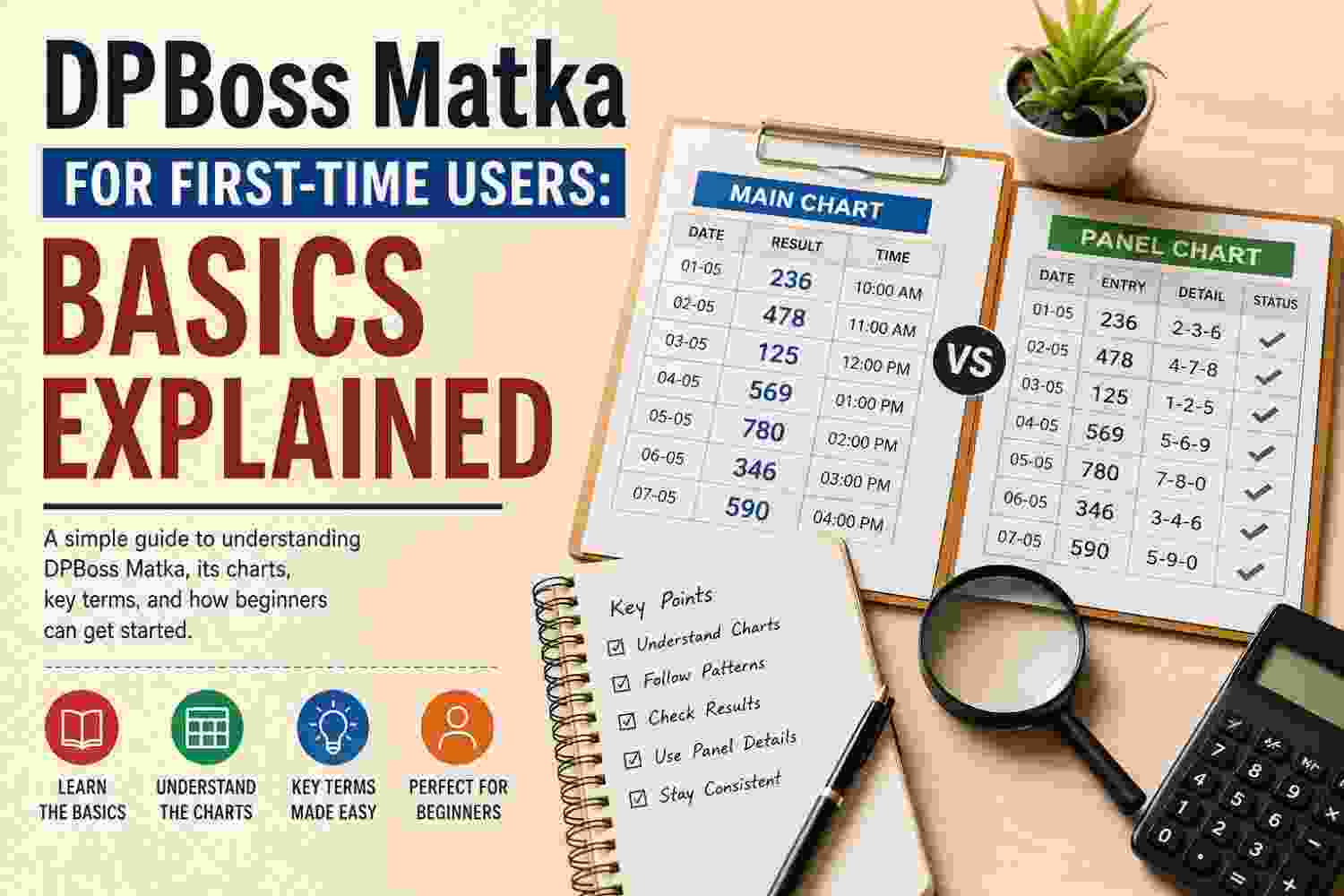
First-time users can find DPBoss Matka confusing because result displays often combine market names, opening figures, closing figures, Jodis, panels, dates, and status updates in a compact space. Reading these elements correctly requires basic familiarity with their roles rather than assumptions based on number patterns. A result may also develop in stages, which means an early entry can remain incomplete until closing information appears. Knowing how charts are arranged, how different number formats work, and how to identify completed records helps new readers interpret displayed information accurately and avoid mistaking historical patterns for guaranteed future outcomes.
What First-Time Users Should Know About DPBoss Matka?
DPBoss Matka generally refers to numerical result information presented through current-result sections and historical charts. New readers should focus first on how information is organised. This approach makes later entries much easier to read.
Results Follow a Structured Format
A typical result display can contain a market or session name followed by numerical information. Depending on the layout, readers may see an opening panel, opening single, Jodi, closing single, and closing panel.
However, every field does not necessarily appear simultaneously. Opening information can arrive first, while closing information may appear later. Consequently, the newest row may remain incomplete for part of a session.
Historical Records Differ From Live Entries
Live sections focus on current or developing results. Historical charts, in contrast, organise completed records by date, weekday, or another chronological structure.
Therefore, first-time users should check whether they are viewing a current result or an archive before interpreting a number. An old completed Jodi should never be mistaken for a newly published result.
Basic Number Formats New Users Will See
The numerical structure becomes much clearer once readers separate singles, Jodis, and panels. Each format has a different number of digits and serves a different role within a result.
Single Digit
A single contains one digit from 0 through 9. Depending on its position, it can represent the opening single or closing single.
Position matters because the opening and closing sides perform separate functions. Moreover, the same digit can appear on both sides without becoming the same field.
Jodi
A Jodi contains two ordered digits. Generally, the opening single forms the first digit and the closing single forms the second.
For example, an opening single of 3 and closing single of 7 create 37. Reversing those positions produces 73, which represents a different pair.
Leading zeroes also matter. Therefore, 04 should remain 04 rather than being shortened to 4.
Panel, Patti, or Panna
A panel normally contains three digits. Readers may also encounter Patti or Panna as labels for three-digit combinations, depending on the format being used.
A panel differs from a Jodi because it contains three positions rather than two. Detailed result rows can include an opening panel and a separate closing panel.
How Opening and Closing Results Work
Opening and closing stages form a central part of many DPBoss Matka displays. New users should read them as sequential components of a recorded session rather than unrelated numbers.
Opening Stage
The opening stage can show an opening panel and its associated single. At this point, the final Jodi may remain unavailable because the closing digit has not appeared.
Consequently, readers should avoid filling the missing position from previous results, repeated numbers, or perceived patterns.
Closing Stage
The closing stage supplies the remaining information required to complete the session. Once the closing single appears, it forms the second digit of the Jodi.
A detailed layout may also display a closing panel. Therefore, readers should trace the same row from the market name through all relevant fields.
Completed Result
A result becomes complete when the expected opening and closing information appears according to the chart's normal structure.
If the newest row looks different from earlier completed rows, compare the fields carefully. A blank space, dash, or placeholder can indicate pending information rather than a numerical value.
How to Read a DPBoss Matka Result Correctly
First-time users can reduce mistakes by following the same checking sequence every time. Randomly scanning the largest or newest-looking number can lead to confusion.
Confirm the Market Name
Start with the market or session label attached to the result. Several entries may appear close together, so selecting the correct row matters.
Additionally, similar timings do not prove that two rows represent the same session. The written label should control the identification.
Check the Date
Next, verify the date associated with the entry. A display may retain an earlier result while a newer session remains pending.
Therefore, do not assume that a prominent completed number belongs to the latest date without checking its position.
Follow the Row Across
After identifying the correct label and date, read horizontally through the relevant fields. Note the opening information, Jodi, and closing information only when clearly displayed.
This habit prevents accidental movement into a neighbouring row.
Preserve Every Digit
Copy numbers exactly as shown. Do not reverse digit order, remove leading zeroes, or treat blanks as zeroes.
Accuracy depends on preserving both digit identity and position.
Why Some Results Look Incomplete
A partial result can seem confusing to someone seeing DPBoss Matka for the first time. In most cases, an unfinished row simply reflects the current stage of publication.
Opening Information May Appear First
The opening panel or single can become visible before closing information. As a result, part of the row may contain numbers while another part remains blank.
This structure does not automatically indicate a technical problem.
Closing Information Can Arrive Later
Once closing information becomes available, the row may update again. The completed Jodi can then appear with the remaining fields.
Meanwhile, different displays may refresh at slightly different moments because publication methods can vary.
Placeholders Are Not Results
Dashes, blank cells, or other symbols may indicate that information remains pending. They should not be converted into guessed digits.
Similarly, a blank field does not mean zero. Zero counts as a result digit only when the display explicitly prints 0.
How Historical Charts Help First-Time Users
Historical charts organise earlier results and make the numerical structure easier to inspect. They can help readers verify dates, completed Jodis, and panel positions.
However, archives should function as records rather than prediction tools.
Reading Rows and Columns
Some charts organise dates vertically, while others group results by week or weekday. First identify the date labels, then follow the corresponding row or column.
Additionally, check where each week begins and ends. Missing sessions or blank spaces can otherwise create alignment errors.
Checking Older Jodis
A historical Jodi chart can show which two-digit pairs appeared on earlier dates. This makes it useful when verifying a previously recorded result.
Nevertheless, an old pair does not become more likely merely because it appeared frequently or has been absent for a long period.
Comparing Completed Entries
Earlier completed rows can also clarify the layout of the newest entry. If previous records consistently contain two panels and one Jodi, an unfinished current row may simply await its remaining fields.
Common Vocabulary First-Time Users May Encounter
Familiarity with frequently used labels makes DPBoss Matka displays easier to navigate. New readers do not need to memorise every variation immediately; the basic categories provide enough context for accurate reading.
Open
Open generally refers to the opening side of a session. Depending on context, it may describe the opening single or the broader opening stage.
Close
Close refers to the closing side. In a Jodi, the closing single usually occupies the second position.
Ank
Ank commonly refers to a single digit from 0 through 9. Its exact role depends on whether it appears on the opening or closing side.
Jodi
Jodi means a two-digit pair formed in an ordered structure. The first and second positions should never be swapped casually.
Panel
Panel generally refers to a three-digit combination associated with either side of the session.
Chart
A chart stores earlier results in an organised historical format. Dates, weekdays, rows, and columns help readers locate specific entries.
Mistakes First-Time Users Should Avoid
Most early errors arise from reading position, timing, or formatting incorrectly. Avoiding a few common habits can make result checking much more accurate.
Confusing a Jodi With a Panel
A Jodi contains two digits, while a panel normally contains three. Counting the displayed positions provides a quick way to distinguish them.
Reading the Wrong Row
Closely spaced market names can cause accidental cross-reading. Therefore, trace the selected row from its label to the final field.
Treating a Partial Result as Complete
An opening digit alone cannot form a completed two-digit Jodi. Wait for the closing digit before recording the pair.
Ignoring Leading Zeroes
Pairs such as 02 and 20 differ. Removing the zero from 02 also destroys its two-position format.
Assuming Blank Means Zero
Blank cells and printed zeroes have different meanings. Record zero only when it appears explicitly.
Predicting From Repetition
Repeated numbers can appear in historical records without creating a dependable rule for later outcomes. Consequently, frequency, gaps, and visual sequences should not be treated as guarantees.
A Simple Checking Routine for New Users
A consistent routine helps first-time readers interpret DPBoss Matka information without jumping between unrelated numbers.
Use the following sequence:
- Locate the intended market or session.
- Confirm the displayed date.
- Identify the correct result row.
- Check whether opening information has appeared.
- Read the opening panel if the layout provides one.
- Identify the opening single.
- Check whether the closing side remains pending.
- Wait for the closing single when necessary.
- Read the completed Jodi in the displayed order.
- Check the closing panel where applicable.
- Preserve all leading zeroes.
- Review any status or timing information.
- Compare the completed entry with the historical chart if verification is needed.
- Recheck the market and date before saving or copying the result.
Following the same order reduces mistakes caused by visual clutter. Moreover, it separates confirmed information from assumptions.
How to Check Whether a Result Is Current
Freshness matters when a user wants the latest available record. Several simple checks can indicate whether a display has received the expected update.
Look at the Latest Date
Confirm that the newest row carries the relevant date. However, remember that a current date can still contain an incomplete session.
Inspect Both Sides
Check whether opening and closing information both appear. A completed structure usually indicates that the session has reached its final recorded stage.
Compare With Previous Formatting
Earlier completed entries show what a finished row normally looks like. If the newest row lacks expected fields, it may remain pending.
Allow for Refresh Delays
Technical caching or publication intervals can sometimes delay visible changes. Refreshing can reveal information already published, but it cannot produce a result that has not yet become available.
Using DPBoss Matka Information Responsibly
Result charts can make numerical patterns appear meaningful, especially when readers scan long archives. However, recorded repetition does not establish certainty about future outcomes.
Past Results Remain Historical Data
An earlier Jodi confirms what appeared on a previous date. It does not guarantee what will appear in a later session.
Likewise, a number that has remained absent does not become automatically due.
Patterns Can Be Misleading
Sequences, repeated digits, weekday similarities, and gaps can occur naturally within numerical records. Therefore, they should not be treated as reliable forecasting systems.
Set Clear Limits Around Gambling
Matka involves gambling risk, and financial losses can occur. Anyone who chooses to participate should follow applicable local laws, avoid borrowing money to gamble, and never treat gambling as income or a solution to financial pressure.
Additionally, minors should not participate in gambling activities. Anyone experiencing difficulty controlling gambling should step away and seek appropriate support.
Conclusion
First-time users can read DPBoss Matka more accurately by focusing on structure rather than patterns. Start with the market and date, distinguish singles from Jodis and panels, and check whether both opening and closing information has appeared. Historical charts can verify earlier records, while current displays may change as a session progresses. Careful attention to digit order, leading zeroes, blanks, and row alignment prevents common mistakes. Consistent checking also makes unfamiliar layouts easier to navigate. Past results cannot guarantee future numbers, so readers should treat charts as numerical records and approach any gambling activity lawfully, cautiously, and within firm financial limits.
FAQs
What should a first-time user check first in DPBoss Matka?
Start with the market or session name, then confirm the date and correct row. After that, identify whether the displayed information represents an opening stage, closing stage, or completed result. This order prevents confusion when several markets and numerical formats appear close together on the same display.
What is a Jodi in DPBoss Matka?
A Jodi is a two-digit ordered pair generally formed from an opening single and a closing single. The opening digit appears first and the closing digit second. Therefore, 28 differs from 82. Leading zeroes also matter, so a displayed pair such as 06 should remain exactly 06.
What is the difference between a Jodi and a panel?
A Jodi normally contains two digits, whereas a panel contains three. Detailed result displays may show an opening panel, opening single, Jodi, closing single, and closing panel together. Counting the digits and checking their column positions helps new users distinguish these numerical categories without mixing their roles.
Why does a result sometimes show blank spaces?
Blank spaces can indicate that part of a session remains pending, particularly when opening information appears before closing information. A blank should not be treated as zero or replaced with a guessed digit. Wait until the display explicitly provides the missing value before considering that field recorded.
What do open and close mean?
Open identifies the opening side of a session, while close identifies the closing side. The opening single generally forms the first digit of a Jodi, and the closing single forms the second. Detailed layouts can also associate separate three-digit panels with each side of the recorded session.
Can old DPBoss Matka results predict new results?
No historical result can guarantee a later numerical outcome. Repeated Jodis, long gaps, recurring digits, and apparent sequences may look significant but do not establish certainty. Historical charts are most useful for checking what was recorded previously rather than treating past combinations as dependable predictions of future results.
Does zero count as a valid digit?
Yes, zero can appear as a single or occupy either position within a Jodi. For example, 07 and 70 represent different ordered pairs. However, a blank field does not automatically mean zero. Readers should record 0 only when the result display explicitly shows that digit.
How can a first-time user avoid common reading errors?
Confirm the market, date, row, and result stage before copying numbers. Preserve digit order and leading zeroes, distinguish two-digit Jodis from three-digit panels, and never fill blank fields from assumptions. Additionally, compare a questionable entry with the normal structure of earlier completed records before treating it as final.