
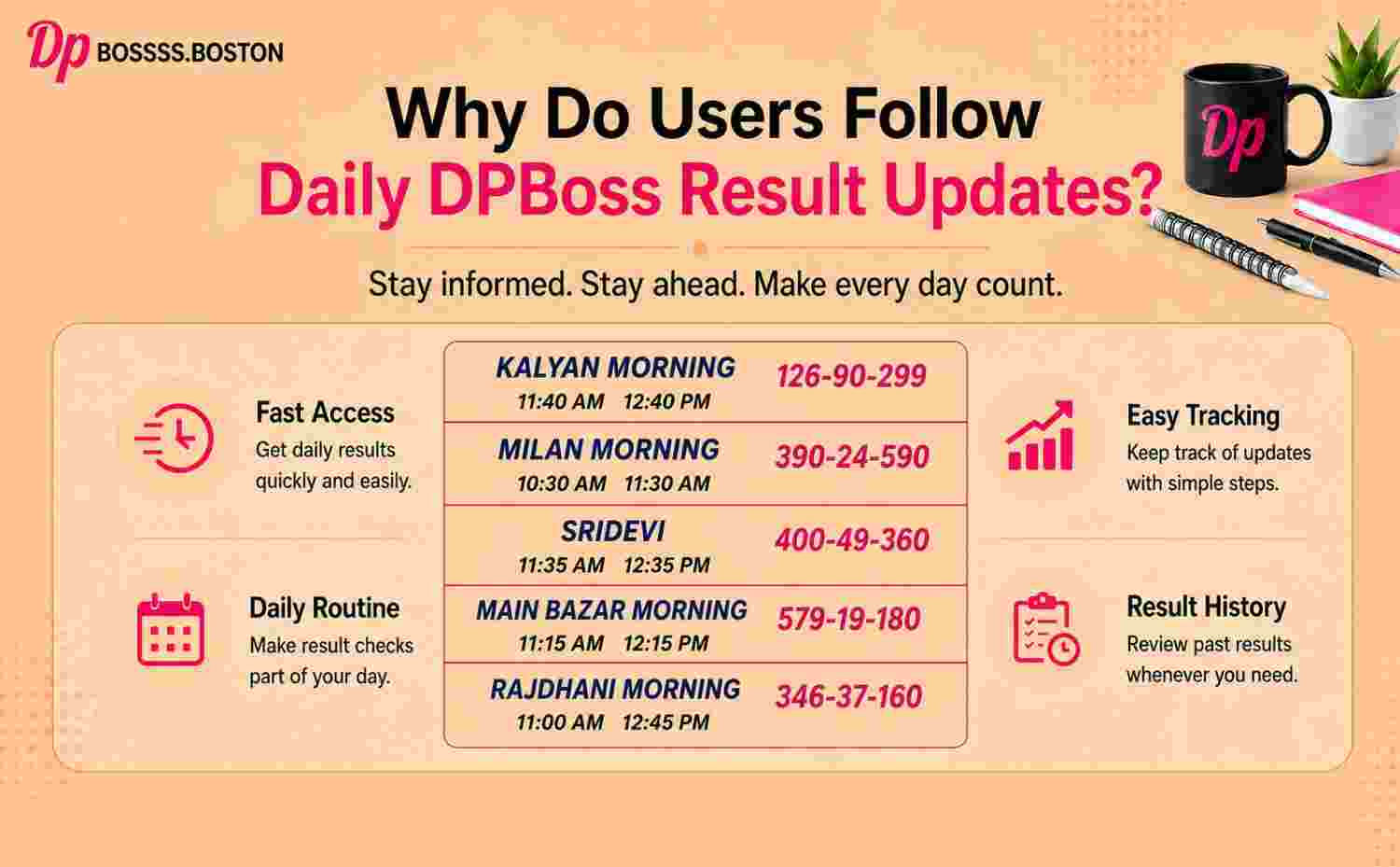
Daily result tracking requires accuracy, consistency, and an organised record-keeping method. DPBoss Matka result formats can contain several numbers, time slots, market names, and open or close stages. Therefore, readers need a clear system for recording each update without confusing incomplete information with confirmed results. A well-maintained tracker makes daily records easier to review, compare, and verify. It also prevents small transcription errors from affecting later analysis.
What Does Daily Result Tracking Mean?
Daily tracking involves recording announced results in chronological order and preserving enough information to identify every entry correctly. Rather than remembering isolated figures, a tracker connects each result with its date, market, session, and publication status.
Moreover, organised records allow readers to identify missing entries quickly. They can also separate recently displayed information from older results and correct mistakes before those errors spread through an entire chart.
Core Information in a Daily Record
A useful daily entry should contain several basic details:
- Calendar date
- Day of the week
- Market or category name
- Open result
- Close result
- Full panel or combined format
- Announcement time
- Verification status
- Notes about delays or corrections
Each field serves a specific purpose. For example, the date establishes chronology, while the market name prevents confusion between categories that publish results during similar time periods.
Similarly, a verification field shows whether an entry remains provisional or matches the completed daily display. This distinction becomes particularly useful when a session updates in stages.
Why Consistent Formatting Matters
Changing the recording style every day makes comparison unnecessarily difficult. Therefore, trackers should use the same date format, number spacing, headings, and status labels across all entries.
For instance, recording one date as 28/08/2026 and another as August 28 may not create an immediate problem. However, inconsistent formats can disrupt sorting when records move into a spreadsheet or digital database.
Consistency also improves visual scanning. Readers can locate open, close, and combined results faster when every row follows an identical structure.
How DPBoss Matka Results Usually Appear
DPBoss Matka information often follows a structured sequence rather than appearing as one isolated value. Consequently, readers should recognise how different result components relate to one another before entering them into a tracker.
A display may show a market name beside an open panel, a central pair, and a close panel. Some sessions update each part separately, which means the complete line may remain unavailable until the final announcement.
Open Result Stage
The open stage represents the first announced portion of a result cycle. When this figure appears, the remaining section may still show a blank space, symbol, or pending indicator.
Therefore, trackers should avoid treating an open update as a completed daily result. Marking it as “open confirmed, close pending” creates a clear distinction between partial and final information.
Additionally, readers should record the announcement time when possible. That timestamp helps explain why an earlier screenshot or handwritten note contains only part of the completed sequence.
Close Result Stage
The close stage completes the second part of the daily cycle. Once it appears, readers can record the full format and change the entry’s status from pending to complete.
However, copying only the closing figure can remove valuable context. A reliable record preserves both stages alongside the central pair or combined value, depending on the displayed structure.
After entering the close result, readers should compare the complete row against the source display. This quick check catches reversed digits, missing zeros, and entries placed under the wrong market.
Panel and Pair Presentation
Panel formats generally use grouped digits, while pair formats place two derived digits together. Since these structures look different, a tracker should provide separate fields instead of combining everything inside one crowded cell.
For example, a clear row might include an open panel field, pair field, and close panel field. Consequently, readers can review each component independently without splitting the data again later.
Spacing also matters. Standard separators, such as hyphens or dedicated columns, reduce visual confusion and support faster comparison across several dates.
Building a Reliable Daily Tracking System
An effective system does not require complicated software. Instead, it needs clear fields, repeatable procedures, and routine verification. Readers may use a notebook, spreadsheet, or simple digital note, provided the chosen format preserves chronological order.
Nevertheless, spreadsheets usually offer stronger sorting, filtering, and error-checking options. Paper records may still suit readers who track only a few categories.
Choose One Primary Record
Using several unrelated notebooks or files often creates duplicate or conflicting entries. Therefore, select one primary location for all confirmed DPBoss Matka records.
Temporary notes can support quick updates, but readers should transfer them into the main tracker promptly. Otherwise, an incomplete note may remain separate from the verified record.
The primary file should also have a clear name and stable location. Labels such as “Daily Results 2026” work better than vague filenames that become difficult to identify later.
Create Standard Columns
A spreadsheet can use the following column order:
- Date
- Day
- Market
- Scheduled session
- Open panel
- Open digit
- Pair
- Close digit
- Close panel
- Update time
- Status
- Notes
This arrangement follows the normal reading sequence. Moreover, dedicated columns prevent accidental mixing of panel values with single digits.
Readers who track multiple markets may create separate sheets for each category. Alternatively, one master sheet with filters can keep all entries together while allowing focused views.
Use Clear Status Labels
Status labels make incomplete information immediately visible. Useful labels include:
- Pending
- Open announced
- Close pending
- Complete
- Corrected
- Not published
- Verification required
Colour can reinforce these labels. For instance, yellow may indicate pending entries, green may mark completed rows, and red may flag corrections. However, written labels should remain present because colour alone may become unclear when printed or viewed on another device.
Furthermore, standard labels prevent readers from inventing new descriptions each day. A controlled set keeps records easy to search and sort.
A Step-by-Step Daily Tracking Routine
A fixed routine reduces rushed copying and improves long-term accuracy. The process should begin before the first update and end only after the completed result receives a final check.
Although announcement schedules may vary, the same recording sequence can apply across different markets and time slots.
Prepare the Tracker Before Updates
Open the correct sheet or notebook before the expected session begins. Then, enter the date, day, market name, and scheduled time in advance.
This preparation reduces typing after publication and lowers the chance of selecting the wrong row. Additionally, it makes skipped sessions obvious because the prepared record remains incomplete.
Readers should check that the previous entry has been closed and verified. Carrying an unresolved result into a new session can cause figures to land on the wrong date.
Record the Open Update Carefully
When the open result appears, copy each displayed component exactly as shown. Avoid relying on memory, even when the number seems simple.
Next, label the row as partially complete and enter the update time. If the source displays a pending symbol for the close stage, leave the related cells blank instead of adding guessed values.
Afterward, perform a digit-by-digit comparison. Reading the copied value aloud internally or checking it from right to left can expose transposition errors that normal scanning may miss.
Add the Closing Information
Once the closing stage appears, return to the same row and fill the remaining fields. Do not create a separate entry unless the format clearly treats it as an independent session.
Then, review the complete sequence from the market name through the close panel. This full-row check confirms that each component occupies its intended column.
Finally, update the status to “complete” and note the final announcement time. If any displayed value changes, retain a correction note rather than silently replacing the original entry.
Complete an End-of-Day Review
At the end of the tracking period, scan every scheduled market for blank or pending cells. Consequently, missing information becomes visible before the next day begins.
Check dates, market labels, duplicate rows, and unusual formatting. Similarly, confirm that every completed entry contains both the open and close components required by its result structure.
A short daily review usually takes less effort than repairing several weeks of inconsistent records. Regular checks also make the archive more dependable for later reference.
Verifying Result Accuracy
Accurate tracking depends on more than careful copying. Readers must also distinguish between preliminary displays, completed entries, corrections, and information captured at different times.
DPBoss Matka records can update during a session, so an early observation may not represent the final daily line. Therefore, verification should form part of every tracking routine.
Compare Complete Number Strings
A visual glance may overlook one incorrect digit. Instead, compare each number string in small groups.
For a three-digit panel, check the first, second, and third positions separately. Then, compare the pair and repeat the process for the closing panel.
This method takes only a few seconds. Moreover, it reduces errors caused by visually similar digits or reversed positions.
Check the Market and Date Together
A correct number placed under the wrong date still creates an inaccurate record. Accordingly, verification should include the market heading and calendar date, not merely the result figures.
Late-night sessions deserve additional attention because the calendar date may change around the publication period. Trackers should follow the date attached to the displayed result rather than making assumptions based solely on viewing time.
Meanwhile, duplicate market names or closely scheduled categories may require separate tabs, colour bands, or abbreviations.
Preserve Correction Details
If a displayed entry changes, record the correction time and describe what changed. For example, a note might state, “Close panel corrected after final update.”
This practice protects the integrity of the archive. In contrast, silent edits remove the history of the record and make earlier screenshots appear inconsistent.
Corrections should remain factual and brief. Avoid adding speculation about why an update occurred unless confirmed information accompanies the change.
Organising Historical Records
Daily tracking becomes more useful when readers can retrieve older entries without searching through an unstructured list. Therefore, archives need predictable naming, sorting, and storage rules.
A strong archive preserves original values while allowing monthly or yearly comparisons. It also protects records from accidental deletion or overwriting.
Arrange Entries Chronologically
Store records in ascending or descending date order, but use one approach consistently. Descending order places the latest result at the top, while ascending order mirrors a traditional calendar sequence.
Both methods work effectively. However, mixing them across sheets can make navigation confusing.
Monthly divisions also improve readability. Readers may use separate tabs, heading rows, or filtered date ranges to keep long archives manageable.
Separate Markets When Necessary
A single master sheet suits users who want one searchable database. Yet separate market tabs may provide a cleaner view when several sessions publish each day.
If using individual tabs, keep the same column structure throughout. Consequently, records can move between sheets without requiring reformatting.
A summary sheet may then list each market’s latest completed entry. This layout offers a quick overview while preserving detailed records elsewhere.
Create Backup Copies
Digital trackers can suffer from deletion, device failure, or accidental editing. Regular backups protect months of carefully recorded information.
Useful backup practices include:
- Saving a dated copy each week
- Keeping one read-only monthly version
- Exporting completed sheets in a stable format
- Storing a second copy on another authorised device
- Avoiding edits inside archived versions
Version names should include clear dates. For example, “Results_August_2026_Final” communicates more than labels such as “new copy” or “latest file.”
Using Charts for Faster Review
Charts convert rows of historical data into a compact visual layout. Although they do not predict future outcomes, they help readers locate dates, compare formatting, and review previous entries more efficiently.
The value of a chart depends on accurate source records. Consequently, readers should build charts only after completing verification.
Daily and Weekly Chart Views
A daily view presents each session separately, making it useful for checking recent updates. Conversely, a weekly view groups several dates and supports broader comparison.
Readers can place dates across the top and market names down the side. Alternatively, they can arrange markets in columns and dates in rows.
Whichever layout they choose, consistent orientation matters. Frequently rotating the chart structure increases the risk of reading values against the wrong heading.
Monthly Archive Layouts
Monthly charts offer enough space to review repeated dates, gaps, and corrections without producing an excessively large file. Each month should have a clear title and defined date range.
Additionally, weekends, closed sessions, or unpublished results should use labels rather than zeros. A zero may represent an actual digit, while “closed” communicates that no result appeared.
Frozen headings and filters can improve spreadsheet navigation. These features keep dates and market names visible while readers scroll through longer records.
Common Daily Tracking Mistakes
Even a well-designed tracker can become unreliable when readers skip basic controls. Most errors arise from rushed entry, inconsistent formats, or assumptions about unfinished updates.
Recognising these mistakes makes prevention easier and keeps the DPBoss Matka archive clear.
Treating Partial Results as Final
An open result does not automatically represent the complete session. Therefore, marking the entry as final before the closing stage appears can create misleading records.
Use pending labels and leave unavailable fields empty. Moreover, revisit every partial row during the end-of-day review.
Entering Numbers from Memory
Short number strings may appear easy to remember, yet transpositions happen frequently. Always copy directly from the visible display and verify each position afterward.
If immediate entry remains impossible, capture a lawful personal note and transfer it carefully. Then, compare the transferred version again before marking it complete.
Mixing Dates or Markets
Similar market names and nearby announcement times can cause misplaced entries. Pre-filled rows, separate sections, and clear headings reduce this risk.
Furthermore, avoid copying several results into an unsorted note before deciding where they belong. Record the market and date beside every temporary value.
Overwriting Without Documentation
Replacing an incorrect entry without noting the change weakens the archive. Instead, add a brief correction remark, timestamp, and final verified value.
This approach maintains transparency and helps readers reconcile earlier records with later versions.
Responsible Interpretation of Tracked Data
Historical records show what appeared previously; they do not establish what must happen next. Random outcomes can create repetitions, gaps, and visual patterns without offering dependable predictive value.
Therefore, tracking should focus on accurate documentation and factual review. Readers should avoid presenting observations as guarantees or certain forecasts.
Separate Records from Predictions
A tracking sheet should store confirmed results, not unsupported expectations. If readers add analytical notes, they should place them in a separate column or file.
This separation protects the original record. Additionally, it prevents assumptions from becoming confused with published values during later review.
Recognise the Limits of Patterns
Repeated digits may attract attention, but repetition alone does not prove a stable sequence. Similarly, a number that has not appeared for several sessions does not become certain to appear next.
Past frequency describes historical data only. Consequently, responsible review treats patterns as observations rather than promises.
Maintain Personal Limits
Result tracking should never interfere with essential spending, work, sleep, or family responsibilities. Where money-based participation occurs, strict financial limits and local legal requirements deserve priority.
Readers should stop if tracking causes stress, secrecy, debt, or repeated attempts to recover losses. Support from a trusted person or qualified service may help when personal control becomes difficult.
Conclusion
Daily result tracking works best when every entry follows a consistent structure and passes a careful verification process. Record dates, markets, open stages, closing stages, timestamps, and status labels in dedicated fields. Moreover, preserve corrections, organise monthly archives, and maintain secure backups. DPBoss Matka records become easier to review when readers separate confirmed information from assumptions and keep partial updates clearly marked. Historical patterns can support orderly comparison, but they cannot guarantee later outcomes. Accurate documentation, responsible interpretation, and personal limits should remain central to every tracking routine.
FAQs
How often should a daily tracker be updated?
Update the record after each confirmed stage and review it once more after the session closes. This method preserves announcement order without treating partial information as final. Additionally, an end-of-day check can identify blank fields, duplicate rows, incorrect dates, and entries that still require verification.
Should open and close results use separate columns?
Yes. Separate columns make each stage easier to verify and prevent incomplete results from looking finished. They also support sorting, chart creation, and historical comparison. Moreover, dedicated fields reduce confusion when a market displays an open panel, pair, closing digit, and close panel within one completed line.
What should a tracker show when no result appears?
Use a clear label such as “not published,” “closed,” or “pending confirmation,” depending on the situation. Avoid entering zero because zero may represent a valid result digit. A written status preserves meaning and allows readers to distinguish missing information from an actual announced value.
How can transcription errors be reduced?
Copy values directly, compare digits individually, and verify the complete row after the close update. Standard columns and consistent separators also help. Additionally, check the date and market name beside every figure, since a correctly copied number still creates an error when placed under the wrong session.
Can historical DPBoss Matka records predict future results?
No historical record can guarantee a future result. Charts may reveal past frequencies, repetitions, or gaps, but random outcomes can produce those patterns naturally. Therefore, readers should use archives for organised reference and factual comparison, while treating any prediction based on previous figures with caution.